
Read the Bible in 2023 ◊ Week 27: Wednesday
 9The things you not only learned and received but also heard and saw in me, these things put into constant practice, and the God of peace will be with you.
Paul writes about anxiety in chapter 4 of his letter to the Philippians. Verses 6 and 7 are well-known and frequently quoted. I want to put these verses in context of the verses before and after them and look at Philippians 4:4–9. The entire passage is about peace, not just Philippians 4:6–7. It helps me so much to understand this, and I hope it will help you as well. After Paul urges Euodia and Syntyche to resolve whatever problems they’ve had, asking their fellow believers to help them, he writes:
Sometimes when I’ve been very anxious about something looming over me, and I’ve prayed with genuine thanksgiving, letting God know my petitions, I’ve found my heart and mind remained riddled with anxiety. This has bothered me greatly. I know that at times, whether due to our nature, our health, our background, our lack of support, or some other reason, we can find ourselves especially vulnerable to anxiety. We may need the help of others to sort through these things, but the bottom line is that we need God’s peace.
J. A. Motyer explains this passage so well as he looks at our needs, God’s promises, and the conditions in Philippians 4:4–9. I’m going to quote him at length because I found what he writes to be so helpful. Take your time as your read. Think about what he says. May God bless you with his insight into this passage.
“In calling for unity and unanimity within the local church fellowship, Paul starts with the quarreling individuals Euodia and Syntyche (verse 2), but then he proceeds with a general exhortation to all individuals. He uses plural verbs, ‘Rejoice’, etc., but the command is common rather than corporate, for his point of conclusion is ‘your hearts and your minds’ (verse 7) — the inward state of the individual church members. We shall study his teaching under three headings: the needs, the promises and the conditions.
1. The needs
“…this passage…presents the same pattern which we found in 1:27 – 2:4. Again we have an inverted triangle with long side uppermost and the point at the bottom. The long side represents the frontier where church and world face each other: the ‘enmity’ of 3:18. The point on which the church is supported for the conflict is the individual believer — the ‘hearts and minds’ of 4:7. The needs of this believer in the parallel passage in 1:27 – 2:4 were the characteristics of glad self-submission and obedience to the will of God which were exemplified in Christ (2:5–8) But as Paul analyzes the individual needs here, he speaks not of virtues to be practiced but of blessings to be enjoyed: the peace of God . . . will keep your hearts and your minds (verse 7) and the God of peace will be with you (verse 9).
“First, there is the need of a garrison (for this is the meaning of the word guard) around hearts and minds…Hearts and minds point to source and outflow. The source is the heart, that comprehensive term which the Bible uses to include functions which we would distribute between mind, will, emotions and conscience. It is the inner side of the personality, and in particular the inner source from which all outer life springs. The mind is the outflow from this source in terms of definite plans which will entertain imaginations which captivate us, and so forth…
“Hard on the heels of this need Paul mentions another: the need for the conscious presence of God: the God of peace will be with you (verse 9)…
“…Theoretically we know that he is with us; experimentally* we forget him and, lacking a vivid sense of his presence, we fall into sin and slackness which would surely not mar our lives if we were sharply conscious of the Lord alongside. Hence we have a real need to know that the God of peace is with us.
2. The promises
“Against this background Paul paints him three promises expressed in the words which passes all understanding, the peace of God . . . will keep, and the God of peace will be with you.
“The first promise is that our lives will be touched with the mark of the supernatural, something that passes all understanding (verse 7). The meaning here is not of something mysterious and incomprehensible in its own right, but of something which man cannot explain or explain away; something which runs beyond the range of human comprehension…
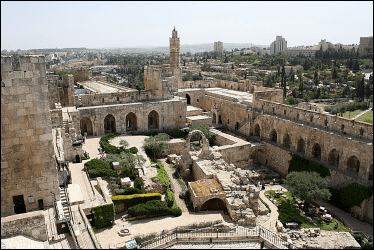
“The second promise is that God’s peace will guard us and God himself will be our companion: the peace of God will . . . keep . . . the God of peace will be with you. This is a picture of a besieged citadel. It is the castle of the mind of the Christian…
“The third promise is peace, the peace of God . . . the God of peace . . . if we study the scriptures which associate ‘peace’ and ‘God’ it is surprisingly full of strength and vigour. The ‘God of peace’ is the God who makes peace between himself and sinners. Thus peace is linked with God’s work of salvation…The God of peace is the God of salvation who does away with sin by the cross of his Son.
“The God of peace is also the God of power, for it is ‘the God of peace who brought again from the dead our Lord Jesus’, and the resurrection is, in the New Testament, the great demonstration of divine power. Another passage says that ‘the God of peace will soon crush Satan under your feet’. The God of peace is thus the God of victory. In the light of all this the promise of peace is very comprehensive indeed — salvation, power and victory all in one…
“We must be careful, in stressing the inner effectiveness of this guardian peace, not to limit it to the realm of peaceful feelings — a ‘sense’ of being at peace. The New Testament idea of ‘peace’ takes its origin in the Old Testament where ‘peace’ (shālôm) possesses the root meaning of ‘wholeness’. It is, to be sure, the inner wholeness of the fulfilled person, but it is also a relational word including (upward) ‘peace with God’ and (outward) peaceful integration within the society of God’s people…
3. The conditions
“…Verse 7 does not say, The peace of God . . . will keep your hearts; it says, And the peace of God . . . Similarly verse 9 says, And the God of peace will be with you. In other words, the promises are consequent upon something else which has been stated previously. In each case the ‘something else’ is a series of commands. The Word of God is saying to us that, if we want to enjoy the promises, then we must obey the commands. We shall spell out these commands as four laws.
“First, there is a law for our relationships, the centrality of the Lord Jesus Christ: Rejoice in the Lord always . . . let all men know your forbearance. The Lord is at hand (verses 4–5)…When he [Paul] says here that we are to ‘rejoice in the Lord’, he continues by urging us to imitate him in our behavior as we wait for his coming: Let all men know your forbearance. The Lord is at hand. Paul must be looking back to the example of Christ which so occupied him when earlier he was exhorting the individual to sanctified relationships (2:5–8)…Such was Christ, and such must be those who claim to rejoice in him: all the more so in that he is near, his coming is at hand. How he will rejoice in us if he finds us so rejoicing in him that we are to content to be like him!
“Secondly, there is a law for our circumstances, the antidote of prayer: Have no anxiety about anything, but in everything by prayer and supplication with thanksgiving let your request be made known to God (verse 6). Paul offers here a timeless and universal remedy for anxiety: Have no anxiety . . . but in everything . . . The antidote to anxiety, and the prelude to enjoyment of peace are to be found in the linked exercise of prayer and thanksgiving. In prayer, anxiety is resolved by trust in God. That which causes the anxiety is brought to the One who is totally competent and in whose hands the matter may be left. In thanksgiving, anxiety is resolved by the deliberate acceptance of the worrying circumstances as something which an all-wise, all-loving and all-sovereign God has appointed. Prayer takes up the anxiety-provoking question ‘How?’ — How shall I cope? — and answers by pointing away to him, to his resources and promises. Thanksgiving addresses itself to the worrying question ‘Why?’ Why has this happened to me? — and answers by pointing to the great Doer of all who never acts purposelessly and his purposes never fail.
“The richness of the vocabulary which Paul uses underscores the importance which he attaches to this recipe for peaceful living. The word prayer (proseuchē) is general: its inner thought is that of addressing a request to God…Our gaze should be so constantly upward that all of life is at once reflected, as by a mirror, to the throne. Supplication (deēsis) points to our lowly status as suppliants and to the bringing of our needs to the Lord. Requests (aitēma) respond to his kindly question ‘What do you want me to do for you?’ Paul writes to us in a simple, practical way: here is the high-road to peace. He uses imperatives, for he is writing about things we should do in practice as believers. He gives us a law for our circumstances.
“Thirdly, there is a law for our thoughts, discipline for our minds: whatever is true . . . think about these things (verse 8). The translation Finally has the unfortunate consequence of making a separation between the law for our thoughts and the earlier laws; but the reference to the God of peace (verse 9) reminds us of the peace of God (verse 7) and makes a break between verses 7 and 8 unlikely. Besides, Paul’s Greek does not require it. The passage would be better served by ‘next’: our prayers are to be bolstered by our thoughts as we seek to know his peace.
“The verb think about (logizomai) means to ponder, to get proper weight and value to, and to allow the resultant appraisal to influence the way life is to be lived…
“We are to meditate on, to prize as valuable, and to be influenced by all that is true, all that merits serious thought and encourages serious mindedness, all that accords with justice and moral purity, all that is fragrant and lovely, all that brings with it a good word, that speaks well, whatever has genuine worth of any sort and merits praise. It is the will of God that by giving attention to things of which he approves we should shape our minds to be like his: to those who do so, he pledges his guardian peace and his own presence as the God of peace.
“Fourthly, we find here a law for our behavior, the authority of the Word of God: What you have learned and received and heard and seen in me, do (verse 9). If we are to know the presence of the God of peace, then, for certain we must seek the life of which he approves…Paul practised what he preached (heard and seen); he had apostolic authority to require his readers to accept what he taught (received). For us who no longer have Paul, nor any apostle, the commandment requires us to submit to the apostolic word, the continuing apostolate of Holy Scripture in the Christian Church.
“These, then, are the laws, or preconditions, for enjoying the promises of God. If we are, as a church, to stand fast in the face of the world, then we must attend first and foremost to our personal sanctification, the state of our own heart and thoughts. If, however, we are to enjoy the power of God at work in our inner being, then we must give attention to these outward laws which God imposes upon us. We must model our relationships on Christ, surround our circumstances by prayer, drill our minds in godly thinking, and subject our life to the Word of God. Do this, ‘and the peace of God, which passes all understanding, will keep your hearts and your minds in Christ Jesus . . . and the God of peace will be with you’. If we ignore the laws we must be prepared to forgo the blessings.”2
In John 13–16, John records what is known the Upper Room Discourse: Jesus’ teachings to His disciples on the evening before His death on the cross. He knew what they would face; He spoke of the peace He would give them in the midst of the tribulation of this world.
The LORD make His face shine upon you,
And be gracious to you;
The LORD lift up His countenance upon you,
And give you peace.”

Silvesterzug Laterne: Bk muc. (CC BY-SA 4.0).
Jerusalem: The Tower of David Citadel: Jean & Nathalie. CC BY 2.0 Deed.
Video: “The Lord Bless You and Keep You,” 2009, sung by a high school a capella group, Half-Step Up. This is from Aaron’s blessing in Numbers 6:22–27.
1Williams Hendriksen, Philippians, Colossians and Philemon (Baker Book House, Grand Rapids MI: 1962) Philippians 4:4–9 translation 192, 197. I removed his parentheses from English words added for readability. I wanted to use his translation because of his use of big-heartedness in verse 5, and because at the beginning of verse 8, he uses the phrase for the rest in his translation rather than the word finally. Hendriksen writes that the Greek word he translates as big-heartedness has no equivalent English word: “For big-heartedness one may substitute any of the following: forbearance, yieldedness, geniality, kindliness, gentleness, sweet reasonableness, considerateness, charitableness, mildness, magnanimity, generosity. All of these qualities are combined in the adjective-noun that is used in the original.” 193.
2J. A. Motyer, “The peace of God and the God of peace,” The Message of Philippians: Jesus our Joy (InterVarsity Press: Downers Grove IL: 1984) 205–213.
*This isn’t a typo. Because Motyer was born in Ireland and went on to become principal of Trinity College, Bristol, this may be British word usage where Americans would use experientially.
I’m using Michael Coley’s Bible reading plan (one page PDF to print) to read through the Bible in 2023. Each day my posts are on different books because he divides Bible readings into seven categories, one for each day of the week: Epistles, The Law, History, Psalms, Poetry, Prophecy and Gospels. There’s more information on his plan and other ones at Read the Bible in 2023.
Copyright ©2011–2023 Iwana Carpenter
 Kindling for Candles