
Read the Bible in 2023 ◊ Week 31: Wednesday
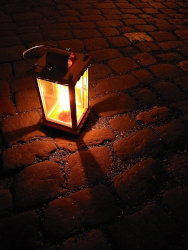 He who abides in the shelter of the Most High
Will abide in the shadow of the Almighty.
I will say to Yahweh, “My refuge and my fortress,
My God, in whom I trust!”
Wednesday’s Bible reading is Psalms 90–92. Psalm 90 begins the fourth book of Psalms. Derek Kidner explains:
“Although the psalms of this collection are not linked by name with the temple choirs, as were most of those in Books II and III, most of them are psalms for public worship (note the titles of 92 and 100: ‘A Song for the Sabbath’; ‘A Psalm for the thank offering’), and they have given the Christian church a number of its canticles (95, 98, 100) and hymns (based on, e.g., 90, 92, 100, 103, 104)…
“In Book IV God is predominantly named Yahweh…Most of these psalms are anonymous; but Psalm 90 is attributed to Moses, and Psalms 101 and 103 to David.”1
The opening words of Psalm 90 describing God as our dwelling place and His eternal nature remind us that He is our security and stability.
Before the mountains were born
Or You brought forth the earth and the world,
Even from everlasting to everlasting, You are God.
Kidner comments:
“Only Isaiah 40 can compare with this psalm for its presentation of God’s grandeur and eternity over against the frailty of man. But while Isaiah is comforting, the psalm is chastened and sobering, even though the clouds disperse in the final prayer. A closer companion to the poem in some respects is Genesis 1–3, on which the psalmist evidently meditates; and this is appropriate, since the title names him Moses, the man of God…
“In an age which was readier than our own to reflect on mortality and judgment, this psalm was an appointed reading (with I Cor. 15) at the burial of the dead: a rehearsal of the facts of death and life which, if it was harsh at such a moment, wounded to heal. In the paraphrase by Isaac Watts, ‘O God, our help in ages past’, it has established itself as a prayer supremely matched to times of crisis.”2
As Kidner mentioned, Psalm 92 is titled, “A Song for the Sabbath.” This is a superscription to this psalm. That means it’s not a heading created by translators, but it’s part of the original text—it is God’s Word.3 He comments:
“This Song for the Sabbath is proof enough, if such were needed, that the Old Testament sabbath was a day not only for rest but for corporate worship (‘a holy convocation’, Lv. 23:3), and intended to be a delight rather than a burden. If it was at the same time a test of faith and loyalty against the pull of self-interest (‘When will the new moon be over, . . . And the sabbath, that we may offer wheat for sale?’ Am. 8:5; cf. Is. 58:13f.), the psalm’s picture of transient worldlings and, in contrast, of the godly who ever renew their strength, is doubly appropriate.
“The hymn, ‘Sweet is the work, my God, my King’, by Isaac Watts, is a felicitous and illuminating paraphrase of the psalm.”4
The ever renewal of the strength of the godly is seen in the closing verses of Psalm 92.
He will grow like a cedar in Lebanon.
Planted in the house of Yahweh,
They will flourish in the courts of our God.
They will still yield fruit in old age;
They shall be rich and fresh,
To declare that Yahweh is upright;
He is my rock, and there is no unrighteousness in Him.
Comparing the life of the righteous to a flourishing tree is similar to the thoughts in Psalm 1 of the righteous as a tree firmly planted by water, and also in Jeremiah 17 of the man who trusts in Yahweh as a tree planted by water. This is a glad psalm, a song of delight in God.
The middle psalm in today’s reading, Psalm 91, is a well-known and beloved psalm because of its promises and reassurance of God’s care and deliverance. The writer opens with his witness to us that God is his shelter and protection.
Will abide in the shadow of the Almighty.
I will say to Yahweh, “My refuge and my fortress,
My God, in whom I trust!”
Kidner titles Psalm 91, “Under His Wings,”5 and writes:
“This is a psalm for danger; for times of exposure and encirclement or of challenging the power of evil. Some of its language, of strongholds and shields, reminds us of David, to whom the LXX ascribes it; other phrases echo the Song of Moses in Deuteronomy 32, as did Psalm 90; but it is in fact anonymous and timeless, perhaps all the more accessible for that.”6
 Kidner again has some wonderful insights. His commentary provides comfort and assurance, and his explanations of some of the phrases keep us from presumption about them. I found his words to be so helpful to me that I wanted to share some of them with you
He divides Psalm 91 into three sections according to the change of person, and titles them: My refuge: 1–2, Your refuge: 3–13, and God’s pledge: 14–16.7 Go back to the psalm and read each section before you read his commentary.
On 91:1–2, he comments:
“So the psalmist declares his own faith before applying it to us. It is an eloquent opening, enriched not only by the four metaphors for security but by the four divine names. Most High is a title which cuts every threat down to size; Almighty (Shaddai) is the name which sustained the homeless patriarchs (Ex. 6:3). By the further appellation, The Lord (Yahweh), Moses was assured that ‘I am’ and ‘I am with you’ (Ex. 3:14, 12 NEB); while even the general term ‘God’ is made intimate by the possessive, as my God.”8
In the second section of Psalm 91, the psalmist contrasts danger with God’s care. Kidner further divides Your refuge: 3–13, into three parts:
“3–6. Versatile protection. Most of these dangers are of a kind which strike unseen, against which the strong are as helpless as the weak…
“As for God’s care, it combines the warm protectiveness of a parent bird (4; cf. Dt. 32:11; Mt. 23:37) with the hard, unyielding strength of armour (4b). Shield and buckler gave respectively the cover that was large and static, and small and mobile.”9
Kidner’s thoughts on some of the verses in this second section emphasize, as he phrases it, God’s “exact, minute providence” and help guard us from using Psalm 91 as a “charm against adversity.”10 We need to know that God is sovereign over every detail of our lives, and trust Him to care for us.
“7–10. Individual protection. You is emphatic: ‘to you it will not draw near’. This is, of course, a statement of exact, minute providence, not a charm against adversity. The no less sweeping promised of Romans 8:28 (‘. . . . everything . . . for good with those who love him’) does not exclude ‘nakedness, or peril, or sword’ (8:35); cf. again the paradox of Luke 21:16, 18. What it does assure us is that nothing can touch God’s servant but by God’s leave; equally (8) that no rebel can escape His retribution.
“11–13. Miraculous protection. This brings the promise doubly to a climax, by revealing the unseen host ‘sent forth to minister for them who shall be heirs of salvation’ (Heb.1:14, AV) and by depicting God’s servants not merely as survivors but as victors, who trample deadly enemies under foot.
“11f. It was characteristic of the devil to read this promise as an invitation to arrogance (Mt. 4:6). It was characteristics of God, Father and Son, that angelic help was sent when it was most needed (Mt. 4:11; Lk. 22:43), accepted as strength for service and sacrifice, and refused for self-advantage (Mt. 26:53f.).”11
Psalm 91 closes with God’s promises to those who love Him. I have highlighted in gold the words that express our trust in God. God’s promises to us are highlighted in dark red:
I will set him securely on high, because he has known My name.
He will call upon Me, and I will answer him;
I will be with him in his distress;
I will rescue him and honor him.
With a long life I will satisfy him
And I will show him My salvation.”
Kidner writes in these last verses of Psalm 91:
“Now comes the confirming oracle of God: a change of voice such as can be heard in several psalms (e.g. 60:6–8; 81:6–16; 95:8–12).
“The trust that invites the Lord’s protection has already been compared to our taking shelter under His roof (1, 2, 9). Now this trust is analyzed into three of its constituents, and God’s safe keeping into as many as eight.
“The word for he cleaves to me in love [LSB: he has loved Me] is used elsewhere in contexts of setting one’s heart on somebody or on some enterprise. As man’s commitment to God it comes only here. Deuteronomy 7:7; 10:15 reminds Israel that God’s commitment, not man’s came first. He knows my name is the second element, since the relationship has rational content, and rests on revelation (cf. 76:1; Ex. 34:5–7). The third element asserts the basic simplicity of it: he calls to me. At bottom the bond is between helper and helpless, a matter of grace.”
“On God’s side, the eight expressions in 14–16 for what He undertakes are not only eight aspects of the whole. There is perhaps a certain progress traceable from the thought of His initial deliverance to that of His abiding companionship (‘with him’) and crowning gifts of glory, length of days (1b; see on 23:6, end) and a salvation no longer waited for but seen. For the Christian, these last three gifts (cf., respectively, Rom. 8:18, 11, 23–25) reveal dimensions only occasionally evident to the saints of the Old Testament.”12
These psalms remind us and teach us the glory of who God is. Because of who God is, in the midst of difficult days, we are secure and protected because we are His. We have stability in the midst of upheaval because He is from everlasting to everlasting.

For a brief overview of the structure and poetry of Psalms see my post, The Five Books of Psalms.
Silvesterzug Laterne: Bk muc. (CC BY-SA 4.0).
Rock Shelter, Turtle Head Cave in Strouds Run State Park: Jaknouse. GFDL-1.2-or-later.
1,2,4,5,6,7,8,9,10,11,12Derek Kidner, Psalm 73–150 (Inter-Varsity Press, Downers Grove IL: 1973) 327, 327–328, 334, 331, 331, 332–333, 332, 332–333, 333, 333, 333–334.
3See The Five Books of Psalms.
I’m using Michael Coley’s Bible reading plan (one page PDF to print) to read through the Bible in 2023. Each day my posts are on different books because he divides Bible readings into seven categories, one for each day of the week: Epistles, The Law, History, Psalms, Poetry, Prophecy and Gospels. There’s more information on his plan and other ones at Read the Bible in 2023.
Copyright ©2011–2023 Iwana Carpenter
 Kindling for Candles