
Yesterday I described the encouragement we find from reading the Scriptures, how God gives us hope through His Word when we are in hard cicumstances.
I also quoted a passage from Jesus’ “Sermon on the Mount,” as He finished his teaching by telling a story of a devastating storm and flood and two houses. I want to expand this by looking at how God’s Word helps us withstand the storms.
In 1981 Geoffrey Thomas wrote, Reading the Bible. Brief as it is, it contains great encouragement and wisdom. He has this insight to the question, why is it so important for us to read God’s Word?
“Life is exceedingly complex: the prevailing climate in present-day Society is hostile to the Christian faith. Marx, Darwin and Freud have all contributed to the dominant philosophy of unbelief that prevails in the Western World. The mass media repeatedly attack the faith of the Bible. The breakdown of the family, promiscuity, divorce, abortion …Answers to our complex contemporary questions are found in the Bible and our task is to equip ourselves with the knowledge of the Word so that all needed insight and strength will be ours. Laziness is our great temptation. Reliance on knowledge gained in the past is a great danger. We must be growing Christians. Our convictions, our conduct and our devotion must be rooted in the Word of God. ‘For whatsoever things were written aforetime were written for our learning, that we through patience and comfort of the scriptures might have hope.’ [Romans 15.4].”1
Robert Murray M’Cheyne, a Scottish minister in 1800s, organized what is today considered a classic reading plan. Read what he wrote to introduce it to his congregation 180 years ago on December 30, 1842:
“MY DEAR FLOCK,—The approach of another year stirs up with me new desires for your salvation, and for the growth of you who are saved…What the coming year is to bring forth, who can tell? There is plainly a weight lying on the spirits of all good men, and a looking for some strange work of judgment coming upon this land. There is need now to ask that solemn question: “If in the land of peace, where thou trustedst, they wearied thee, then how wilt thou do in the swelling of Jordan?”
“Those believers will stand firmest who have no dependence on self or upon creatures, but upon Jehovah our Righteousness. We must be driven more to our Bibles, and to the mercy-seat, if we are to stand in the evil day. Then we shall be able to say, like David, “The proud have had me greatly in derision, yet have I not declined from Thy law.” “Princes have persecuted me without a cause, but my heart standeth in awe of Thy word.””2
This could have been written today by a pastor concerned about his people. At the end of the second paragraph, M’Cheyne mentioned this verse from Jeremiah:
 “If you have raced with men on foot, and they have wearied you,
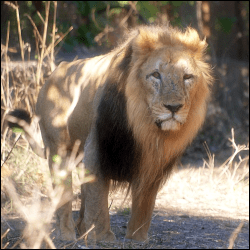
The jungle of Jordan was a dangerous place. Whatever other animals may have lived there, we know there were lions in the jungle of Jordan. Twice, in Jeremiah 49:19 and in 50:44, the Lord compares His judgment, against Edom and against Babylon, to a lion “coming up from the jungle of Jordan.”
As Christians we live in the jungle of Jordan, this present evil age (Galatians 1:4). God has set us free from the law of sin and of death, yet we still live in a world where we live struggle with our own sin, and we live under the weight of injustice and wrong imposed by the wicked. It’s also a world in which creation is in slavery to the corruption of sin, and we may face disease or disaster.
These are the passages from Psalm 119 containing the two verses mentioned by M’Cheyne above. They are two of many passages that tell us how the Bible enables us to withstand storms. As you read, notice in the midst of the psalmist’s troubles, the words: hope, comfort, revive, songs, rejoice, peace. Look at the work God does through His Word in the psalmist’s life.
In which You have made me hope.
This is my comfort in my affliction,
That Your word has revived me.
The arrogant utterly deride me,
Yet I do not turn aside from Your law.
I have remembered Your ordinances from of old, O Lord,
And comfort myself.
Burning indignation has seized me because of the wicked,
Who forsake Your law.
Your statutes are my songs
In the house of my pilgrimage.
O Lord, I remember Your name in the night,
And keep Your law.
This has become mine,
That I observe Your precepts.
But my heart stands in awe of Your words.
I rejoice at Your word,
As one who finds great spoil.
I hate and despise falsehood,
But I love Your law.
Seven times a day I praise You,
Because of Your righteous ordinances.
Those who love Your law have great peace,
And nothing causes them to stumble.
I hope for Your salvation, O Lord,
And do Your commandments.
My soul keeps Your testimonies,
And I love them exceedingly.
I keep Your precepts and Your testimonies,
For all my ways are before You.
Through His Word, God gave the psalmist hope, comfort, revived him, and the psalmist could say, I do not turn aside from Your law.
Not only does God’s Word restore him, but God’s Word gives him a song, joy, and peace. In contrast with the rebellion of the wicked he declares, Your statutes are my songs In the house of my pilgrimage. In the next passage in the midst of persecution, we see his heart for God’s Word. He declares I rejoice at Your word. He is in awe of God’s Word, he keeps God’s testimonies, and three times he declares his love for God’s law, and says Those who love Your law have great peace.
Through His Word, in the jungle we live in, God gives us hope, comfort, revival, songs, joy, and peace. Love His Word and keep it. Build your house on the Rock of His Word to withstand the storms of life.
May His statutes be our songs in the house of our pilgrimage.
That’s why it’s important to read His Word.

1Geoffrey Thomas, Reading the Bible. https://www.biblebb.com/files/rtb.htm. Retrieved 2 January 2011.
Indian lion male (Panthera leo persica) at Gir National Park: Shanthanu Bhardwaj. (CC BY-SA 2.0). This is an Asiatic lion.
1Rev. Robert Murray M’Cheyne via Reading with M’Cheyne, “found on p. 618 of Andrew Bonar’s Memoir and Remains of the Rev. Robert Murray M’Cheyne (Edinburgh/London : Oliphant Anderson & Ferrier, 1892) available on Archive.org. See p. 622 for the date of his writing. M’Cheyne was only 29 years old at the time; he died a few months later on March 25, 1843. (See Robert Murray M’Cheyneat Wikipedia). His Bible reading plan was his legacy to his fellow Christians.
3Derek Kidner, The Message of Jeremiah: Against wind and tide (Inter-Varsity Press, Downers Grove IL: 1987) 60–61.
Copyright ©2022–2023 Iwana Carpenter
 Kindling for Candles